

I did not want to write about this. I really did not want to write about this.
Why? Because I know that anyone who praises Margaret Mitchell’s classic novel—and especially anyone who quotes the parts I am about to quote—runs the risk of being accused of supporting (or, of not adequately opposing) the institution of slavery.
So let me start by saying that I oppose slavery unconditionally. I always have. In fact, I’ll go farther and say that I probably oppose slavery more than you do. If you believe in things like taxation and city councils, then you don’t have as much of a problem with slavery as I do.
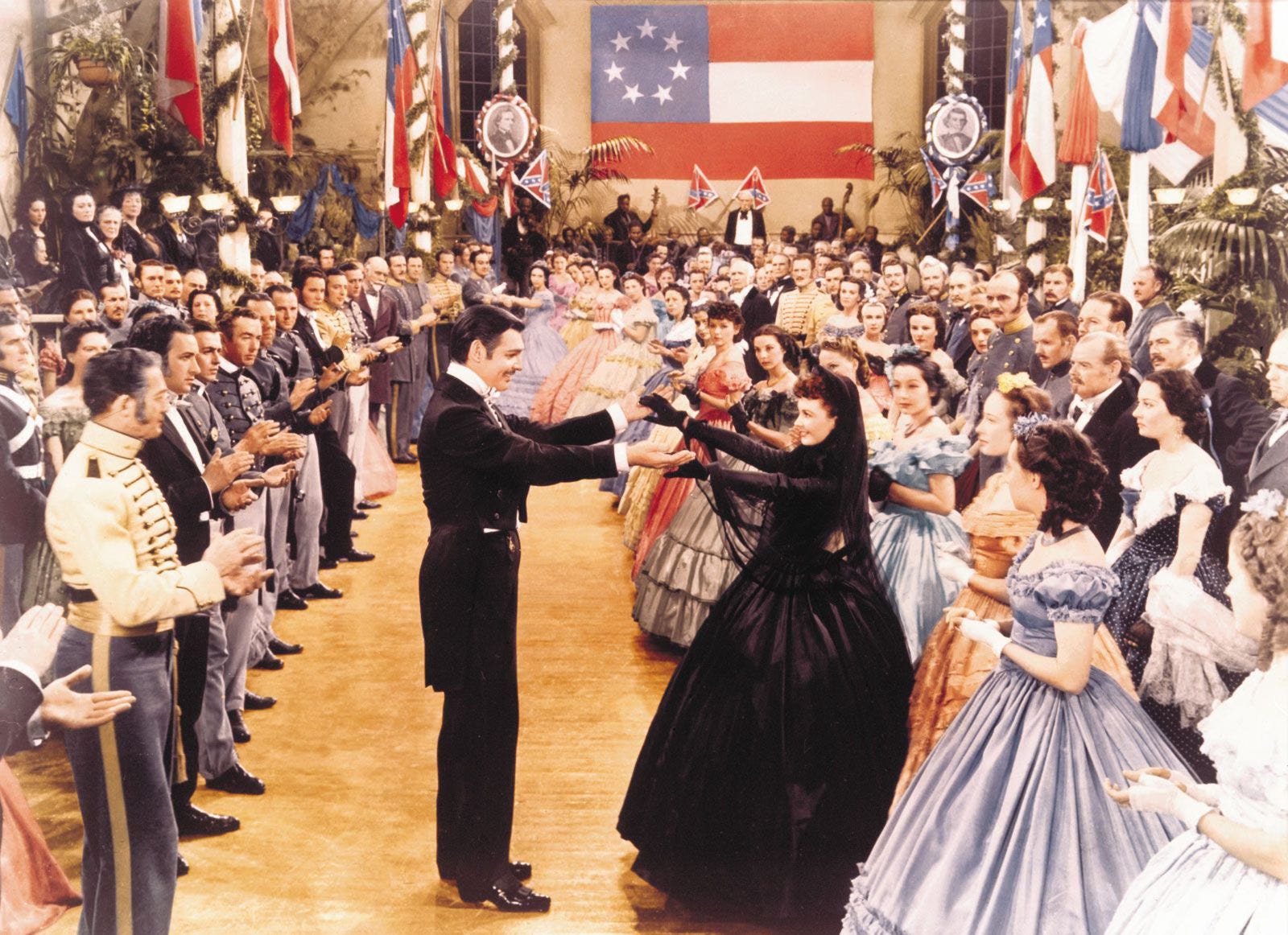
So here’s what I want to say about Margaret Mitchell’s masterpiece (and yes, it absolutely is a masterpiece and you should read it): First, I cannot speak to how historically accurate it is, but what she describes mostly fits with the history of the post-war South as I’ve read about it elsewhere. Second, the picture that GWTW paints for us is, apart from one of intense human drama and keen observations on human nature, a remarkable chronicling of the destruction of a civilization—something all of us should be keenly interested in right now.
(Obligatory PSA: I am against slavery.)
Mitchell shows us, in painful detail, not only what war does to a place, and the people in it, but what is often done to both in its aftermath. This is extremely relevant for anyone who cares about Western civilization, and is worried for its future.
(Obligatory PSA: I don’t hate people from non-Western cultures.)
By now you have probably heard about the horrific murder of Henry Nowak, in Southampton England, late last year—and about the puzzling (I’m being polite) way that the police handled the situation once they arrived on the scene. If you haven’t, you can read about it in this gut-wrenching (but necessary) piece by Millennial Woes. …But I don’t recommend it.

Likewise, you have probably heard about the organized gangs of mostly Pakistani men who had free reign to groom and rape girls throughout Britain, for decades. If you are not familiar with this, you can read all about it in this report, which was released earlier this week. Again, I don’t recommend doing so.
(As an aside: This report was not commissioned by the government of the UK, but by Rupert Lowe, an MP and leader of the “Restore Britan” political party.)
The upshot here is that there appears to be a two-tier system of policing in the United Kingdom: Individuals from certain “preferred” identity groups (ethnic, but also gender-identity groups) receive different treatment from law enforcement, and indeed from the law itself.
As Auron Macintyre writes:
“The Pakistani grooming-gang scandals revealed the pattern. English girls were raped across the country while police, terrified of being called racist, ignored or minimized the crimes. In some cases, victims were treated as the problem. In others, fathers who tried to protect their daughters faced the law instead. The message was clear: The state feared accusations of racism more than it feared the destruction of its own people.
“Immigrant stabbing attacks have also helped justify sweeping bans on defensive weapons, including knives and pepper spray. Yet Nowak died from a ceremonial blade Digwa was permitted to carry. Immigrants enjoy exceptions while native Britons face disarmament. That is not equal justice. It is hierarchy.”

But what does any of this have to do with the trials and tribulations of Scarlett O’Hara?
Let’s start with this passage:
“Looking about her in that cold spring of 1866, Scarlett realized what was facing her and the whole South. She might plan and scheme, she might work harder than her slaves had ever worked, she might succeed in overcoming all of her hardships, she might through dint of determination solve problems for which her earlier life had provided no training at all. But for all her labor and sacrifice and resourcefulness, her small beginnings purchased at so great a cost might be snatched away from her at any minute. And should this happen, she had no legal rights, no legal redress, except those same drumhead courts of which Tony had spoken so bitterly, those military courts with their arbitrary powers. Only the negroes had rights or redress these days. The Yankees had the South prostrate and they intended to keep it so. The South had been tilted as by a giant malicious hand, and those who had once ruled it were now more helpless than their former slaves had ever been.” (Emphasis mine.)
GWTW, p. 610
(Obligatory PSA: I am vehemnently anti-slavery. Probably more so than you (see above.))
Here’s another one:
“Men were insulted on the streets by drunken blacks, houses and barns were burned at night, horses and cattle and chickens stolen in broad daylight, crimes of all varieties were committed and few of the perpetrators were brought to justice.
“But these ignominies and dangers were as nothing compared with the peril of white women, many bereft by the war of male protection, who lived alone in the outlying districts and on lonely roads. It was the large number of outrages on women and the ever-present fear for the safety of their wives and daughters that drove Southern men to cold and trembling fury and caused the Ku Klux Klan to spring up overnight.”
GWTW, pp. 612-613
(Obligatory PSA: I do not support the Ku Klux Klan.)
My point here is not simply that “history rhymes.” My point is that what was done to the post-war South in America was the result of a deliberate policy by a conquering power (the North), to degrade and humiliate—and to destroy the culture of—those it had conquered. In the post-bellum years, the South was occupied by a hostile force, and it did the things that hostile forces do to those they have defeated.
Strikingly, in Mitchell’s account, one of the methods used by the conquering power to subdue and humiliate the Southerners was to indoctrinate the freed slaves to see their former masters as their enemies…
(Obligatory PSA: I am against slavery.)
…and to then set up a legal system that only protected the rights of the former slaves, and not those of white Southerners (whether or not they had been slave owners.)
My point in bringing this up is this: I do not believe that what Britain is dealing with today is the just result of woke culture, or (as Auron Macintyre says) of the state and police fearing accusations of racism “more than it feared the destruction of its own people.” I think what is happening in Britain is more deliberate than that. I believe these are acts of war.
I know that some of you already see it this way, some of you have seen it this way for a long time. But many do not. Many of those who are outraged at the violence that UK authorities have allowed (and, it seems, in some cases at least, participated in) to be inflicted on the citizens they are tasked with protecting do not seem to recognize this. They blame “woke-ism,” “feminism,” “the left,” “suicidal empathy,” and related ephemeral entities. What they need to recognize is that what is being done to Britain, Ireland, and many European countries today, matches almost precisely what has been done in the past to conquered people by those who have waged war on them.
If more folks in the UK and Europe don’t come to recognize this, then they are doomed. Because how can you prevail in a war that you don’t even realize is being waged against you? How can you defend yourself if you can’t even identify your assailant?
and we all saw how those northerners ultimately treated the "blacks" with the unfulfilled promise, "40 acres and a mule"...
human nature doesn't change
Who's the assailant?